One of the most enjoyable ways to understand the world of dates is through the tongue: which is the sweetest and which is the lightest? This is not merely about taste but a practical guide to choosing dates by need — from super-sweet for a special treat to light for those who dislike too much sweetness. As a date reference hub, this page ranks dates from sweetest to lightest, combining commonly reported flavour perceptions with sugar-content data. One important note from the start: "sweet on the tongue" and "glycemic index" are two different things — for the latter, see our dedicated article on glycemic index.
What Determines a Date's Sweetness
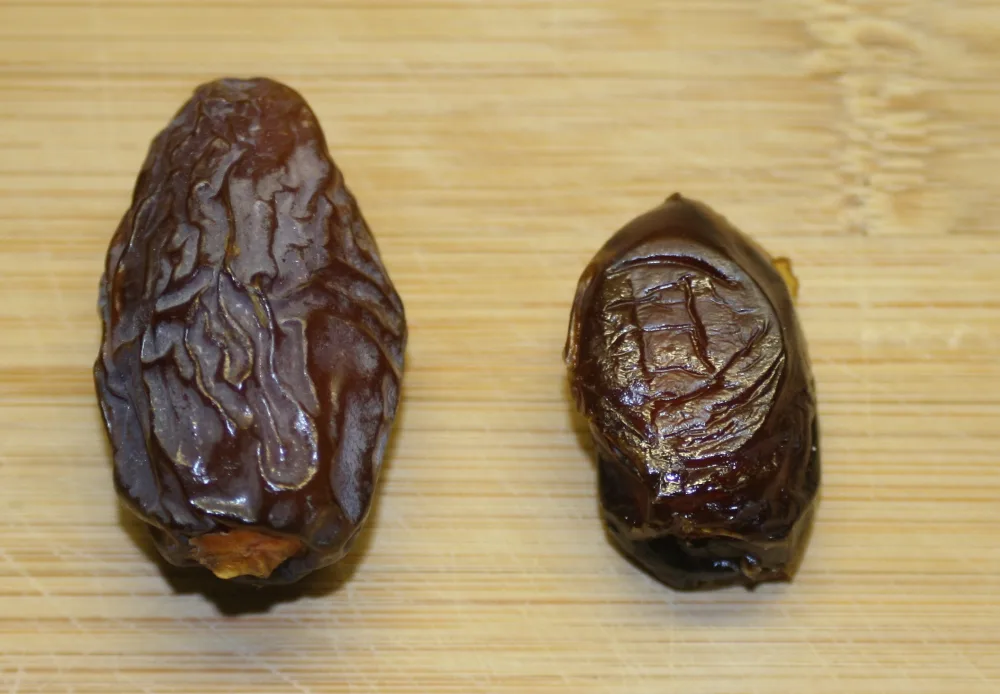
A date's sweetness is set mainly by three things. First, total sugar content: the higher the grams of sugar per 100 grams, the stronger the potential sweetness. Dried dates generally contain about 60–70 grams of sugar per 100 grams, and some varieties such as Sukari are recorded at around 78 grams. Second, sugar-type composition: the ratio of glucose, fructose, and sucrose shapes the sweet character; Medjool is dominated by glucose and fructose with almost no sucrose, while Deglet Noor contains fairly high sucrose. Third, moisture and texture: wet, melting dates tend to taste sweeter and hit the tongue immediately, while dry dates release sweetness more gradually.
Ranking Table: From Sweetest to Lightest
The ranking below combines commonly reported consumer perceptions with a picture of sugar content. Because sweetness is subjective, treat this as a relative guide.
| Rank | Date type | Sweetness | Flavour character |
|---|---|---|---|
| 1 | Sukari | Very sweet | Like honey blended with caramel, intense and immediate |
| 2 | Medjool | Very sweet | Rich sweetness with caramel and a slight smokiness |
| 3 | Mazafati | Sweet | Soft, moist sweetness with a gentle caramel note |
| 4 | Khalas | Medium-sweet | Balanced sweetness, chewy texture |
| 5 | Safawi | Medium-sweet | Like Ajwa but a little lighter, not biting |
| 6 | Ajwa | Light | Not too sweet, smooth, never cloying |
| 7 | Deglet Noor | Light | Lightly sweet, dry, not sticky |
At the top of the list, Sukari and Medjool compete as the sweetest dates; both are often called the "tastiest" by lovers of sweetness. At the lightest end, Ajwa and Deglet Noor are favourites of those who avoid excessive sweetness. Interestingly, the sweetness champion Sukari is recorded with a low glycemic index — a reminder that sweetness on the tongue does not automatically mean a blood-sugar spike.
Total Sweetness vs Glycemic Index: Do Not Confuse Them
Many people equate "the sweetest date" with "the date that raises blood sugar fastest". Yet the two are measured differently. Total sugar content determines how sweet it tastes in the mouth, while the glycemic index measures how fast blood sugar rises after eating. Sukari is the clearest example: very sweet yet relatively low-GI in testing. So if your goal is managing blood sugar, do not just avoid what tastes sweet — pay attention to glycemic index and portion. For an in-depth discussion, see our article Date Glycemic Index.
Choosing by Sweetness Level
Sweetness level can be a practical guide to suit your need:
- For a special treat and dessert. Sukari and Medjool give maximum sweetness; great eaten as is or as a filling.
- For a natural sweetener in cooking. Melting Medjool and Mazafati blend easily into a sugar-replacing paste.
- For those avoiding too much sweetness. Ajwa and Deglet Noor offer a lighter, non-sticky taste.
- For cakes and baking. The drier Deglet Noor tends not to make batter too soft.
Factors That Can Shift Sweetness Perception
Remember that the sweetness ranking is not absolute, because of several factors. Fruit ripeness affects sugar content — riper fruit is usually sweeter. Moisture also plays a role: the same date can taste different in wet versus dry form. Even serving temperature and whether the date is eaten on an empty stomach can change perception. So this ranking is best used as a starting point for taste exploration, not a final verdict. The best approach is still to taste several varieties yourself to find your personal favourite.
Closing
Understanding the sweetness spectrum of dates helps you choose more confidently, whether for snacking, gifting, or cooking. To link sweetness with blood-sugar impact, read Date Glycemic Index, and to choose a variety for an occasion and need, see Guide to Choosing Dates by Need. If you want to try the sweetest varieties such as Sukari and Medjool, or lighter ones such as Ajwa, our Jabodetabek team is ready to help via WhatsApp +62 823-4350-8579.
Tasting the Right Way
For a fair flavour judgement, a few tasting habits help. Taste dates at room temperature rather than straight from the fridge, because cold can dull the perception of sweetness. Start from the lightest variety toward the sweetest so the palate does not tire quickly. Pause and drink water between samples to refresh the taste buds. Notice not only sweetness but also texture, aroma, and aftertaste, since these three shape the overall impression. With this simple method, you can build a personal sweetness ranking that is more accurate than relying on a general list, because in the end your own palate is the best judge of your own taste.
Note: the sweetness ranking is indicative, based on flavour perception and circulating sugar data; sweetness perception differs per person. This article is educational, not medical advice.