The world of dates is full of jargon that confuses first-time buyers. On a single shop shelf you may find variety names (Ajwa, Sukari, Medjool), quality terms (grade AAA, VIP, VVIP), trade terms (carton, bulk, sorted), and Arabic loanwords (rutab, tamr, mufattal). As a date reference hub, we built this page as an A-to-Z dictionary of date terminology focused on the vocabulary you actually meet on package labels, wholesale catalogues, and conversations with sellers, rather than just a list of variety names. The goal is simple: after reading this, you will read date offers with confidence, compare goods fairly, and avoid the costly mix-up of paying a premium price for a lower class of fruit.
Why Date Terminology Matters
Many buying mistakes come down to a single word. "Wet Sukari" and "Sukari mufattal" are the same fruit at very different moisture levels, so their price and shelf life differ too. "Ajwa" and "Ajwa Aliyah" point to different quality classes. "Stem dates" is often mistaken for a variety name when it is merely a presentation. Without the right vocabulary, a buyer is exposed to paying a premium for a low grade, or conversely to missing a good deal because they did not recognise the seller's terms. This glossary works by separating the three layers of meaning most often conflated in the Indonesian market: variety, the genetic type of the fruit; ripeness stage, the fruit's condition at harvest; and trade and quality terms, the way fruit is grouped, packed, and sold.
Quick Table: Three Categories of Terms
| Category | Example terms | Answers the question |
|---|---|---|
| Variety (cultivar) | Ajwa, Sukari, Medjool, Safawi, Mazafati, Deglet Noor | "From which cultivar?" |
| Ripeness stage | Kimri, Khalal, Rutab, Tamr | "How ripe at harvest?" |
| Trade & quality | Grade A/AA/AAA, VIP, VVIP, carton, bulk, sorted, mufattal, stem | "How is it grouped & sold?" |
Keep this three-column frame in mind when reading any label; almost every date term falls into one of these three buckets.
Date Glossary A–Z
A – D
- Aliyah / Aliya — a premium-class marker on Ajwa, often written "Ajwa Aliyah". Usually larger, more evenly dried, naturally glossier, and priced above standard Ajwa. It is not a separate variety but a quality tier within Ajwa.
- Anbara — a very large Madinah variety with a small pit and thick flesh; among the costlier dates from the Holy City.
- Ajwa — the legendary black variety from Madinah, widely known as the "Prophet's date" because it is mentioned in several hadith narrations. Small to medium in size, naturally deep black, soft and wrinkled.
- Barhi — a unique variety enjoyed at three ripeness stages: yellow and crunchy at khalal, brown and soft at rutab and tamr.
- Bulk (curah) — a trade term for dates sold without retail packaging, weighed straight from the carton or sack. Common in wholesale markets and usually cheaper per kilogram than retail packs.
- Carton (kartonan/dus) — purchase by the carton, commonly 3 kg, 5 kg, or 10 kg. Per-kilogram carton pricing is usually lower than retail, which is why it is popular with resellers and large families.
D – M
- Deglet Noor — a semi-dry variety from Tunisia and Algeria, the "queen of dates"; bright golden in colour, slightly dry like a raisin, and often sold on the stem.
- Grade (A, AA, AAA) — a quality classification generally based on size and uniformity, not on flavour or authenticity. Higher grades mean larger fruit and stricter selection, which raises the price.
- Khalal — the ripeness stage when the fruit is full-size but still firm and crunchy, such as yellow Barhi eaten fresh.
- Kimri — the youngest stage: green, hard, and astringent; rarely sold for direct eating.
- Mazafati — an Iranian variety from Bam with high moisture; a "wet date" that needs cold storage to keep well.
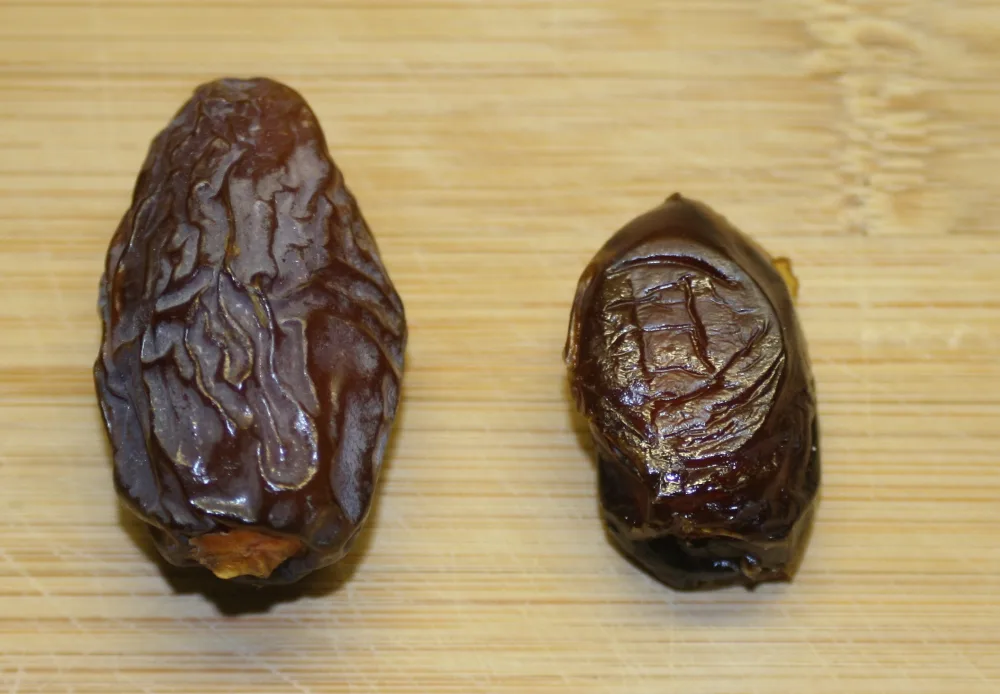
- Medjool — a large Moroccan variety, the "king of dates"; thick flesh, soft texture, and a rich caramel flavour.
- Mufattal — a dried or flattened form of Sukari that keeps far longer than wet Sukari.
P – Z
- Piarom / Mariami — a dark semi-dry Iranian variety, often nicknamed the "chocolate date" for its glossy look and soft sweetness.
- Rutab / Ruthob — the stage when the fruit is ripe, moist, and soft but not yet dried; perishable, seasonal, and considered a delicacy.
- Safawi — a black Madinah variety often ranked second after Ajwa; also called "Kalmi" in South Asian markets.
- Sorted (sortir) — fruit graded by size and condition; "sorted dates" are pre-selected, the opposite of "mixed".
- Sukari — a Saudi variety from Al-Qassim that is very sweet and soft; available in wet and mufattal forms.
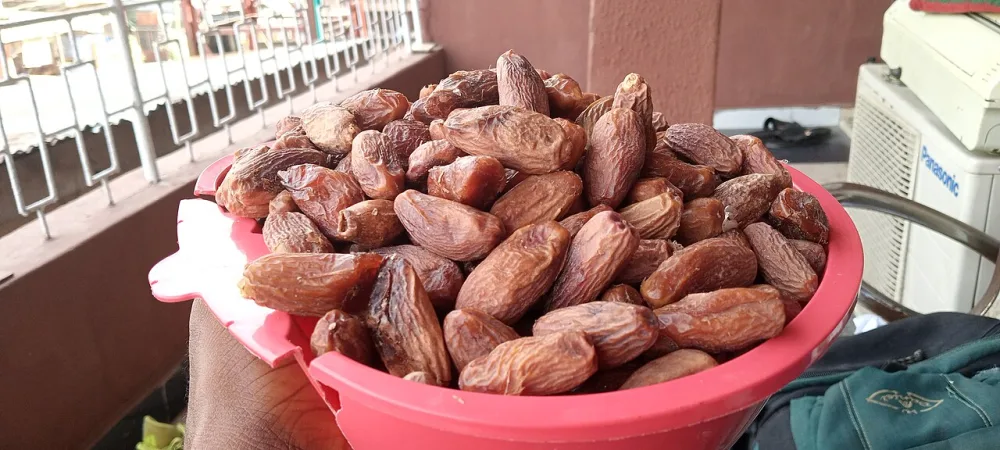
- Tamr — the final ripeness stage: ripe fruit that has been dried, and the most commonly sold form in Indonesia.
- Stem (tangkai) — dates presented still attached to the branch, common on Deglet Noor and some Barhi; not a variety.
- VIP / VVIP — premium markers above AAA on some varieties, especially Ajwa and Sukari, denoting the largest fruit and strictest selection.
- Zahidi — a golden semi-dry Iranian variety; affordable, so it is often an economical choice for large-volume stock.
The Most Misunderstood Terms
The following pairs of terms are worth memorising so you neither mis-buy nor mis-compare prices.
- Variety vs ripeness. "Young dates" is not a variety but a khalal or rutab stage that can come from many varieties such as Barhi. So "young" Barhi and "young" Tunisian dates can taste very different.
- Grade vs authenticity. Grade A does not mean "fake" at all. It is still genuine fruit, just smaller than AAA. Grade speaks to size and uniformity, not purity or nutrition.
- Trade name vs botanical variety. Many names in the market are trade names or local labels, not official botanical cultivars. One "name" can therefore contain different varieties depending on the supplier.
- Wet vs dry. These terms describe moisture, not freshness. Good dried dates are still fresh and nutritious; they simply went through natural drying.
How to Use This Glossary When Shopping
When reading an offer, break the label into three parts: variety, plus stage or condition, plus grade. For example, "Sukari Mufattal AA" means the Sukari variety genetically, in the dried-flattened condition called mufattal, at quality class AA which signals medium-to-large size. With this framework you can compare apples to apples across sellers instead of being confused by marketing words. For deeper notes on each variety, see our Complete Guide to Date Varieties, and to choose dates for cooking, snacking, or hampers, read our Guide to Choosing Dates by Need. To verify grade and condition in person before ordering in volume, our Jabodetabek team can walk you through every term via WhatsApp +62 823-4350-8579.
Note: this article is educational and not medical advice. For specific health conditions (diabetes, pregnancy, allergies), consult a doctor or nutritionist.